
I love my greens but what a challenge to grow them in summer here in the sub-tropics of S-E Queensland. In particular, this past summer, we have experienced consistently high temperatures which have taken their toll in the garden. What a dismay to watch lettuce, silverbeet and other greens wilt and flatten or bolt to seed and turn bitter even with extra care, shade and attention! However, there are two plants that I have recently discovered which have survived the onslaught of the summer inferno and not only survived but flourished.
1. WARRIGAL GREENS
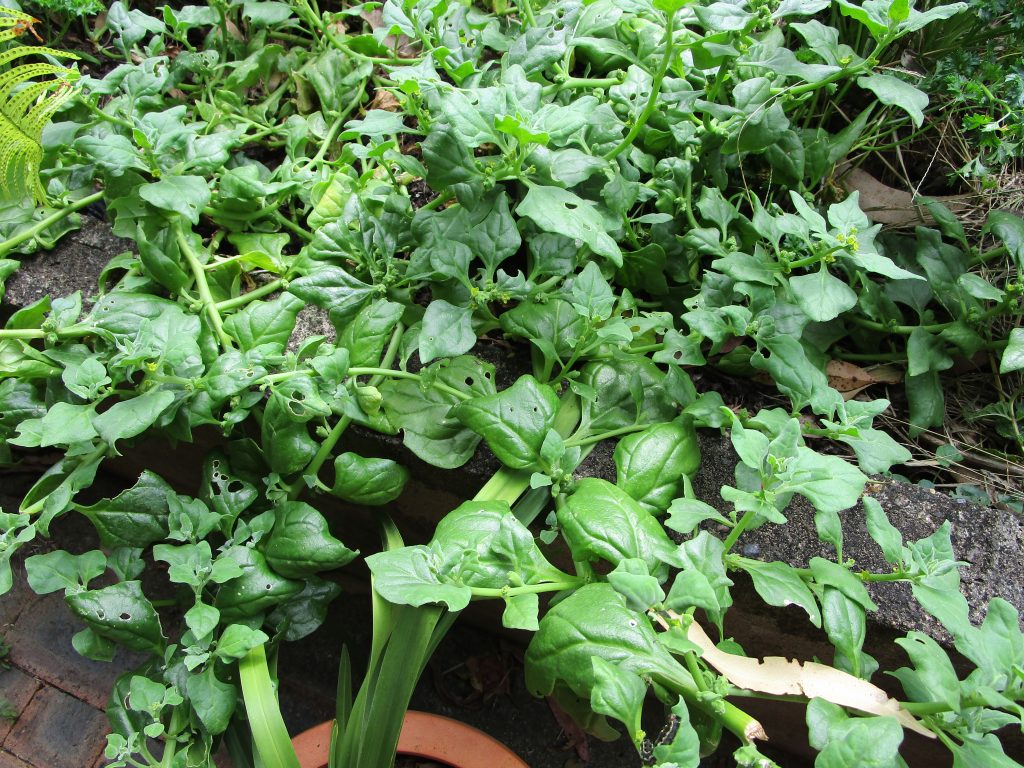
(Also known as Botany Bay Spinach, Cook’s Cabbage and New Zealand spinach.) In 1779, Joseph Banks reported to the House of Commons in England concerning the possibility of settling Australia as a British colony. He spoke of the wild edible spinach that he found growing along the east coast of Australia. So perhaps as a country we are indebted in small way to this native plant.
How to Grow
I have it planted it in a medium rich soil in a position where it receives morning sun and afternoon shade. I have watered it once a week and it has become a flourishing, sprawling groundcover.
Nutrition
Like many green leafy vegetables Warrigal Greens are high iron. It contains potassium, phosphorus and high levels of anti-oxidants, Vitamin A and Vitamin C which explains why Cook took it on voyages to prevent scurvy among his crew.
How to Use
It can be used in any way that you would use ordinary spinach or silverbeet eg. stir-frys, steamed, casseroles, salads etc. It is quite high in oxalic acid so it is recommended that leaves be blanched in boiling water for several minutes then rinsed in cold water before adding to cooking or salads (particularly if you eat a lot of it!)
2. CEYLON SPINACH
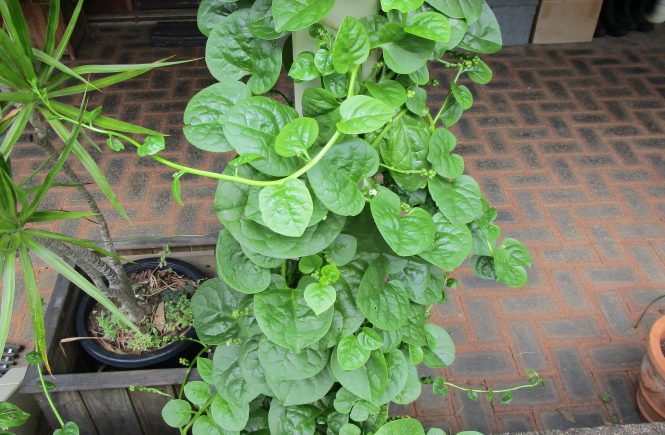
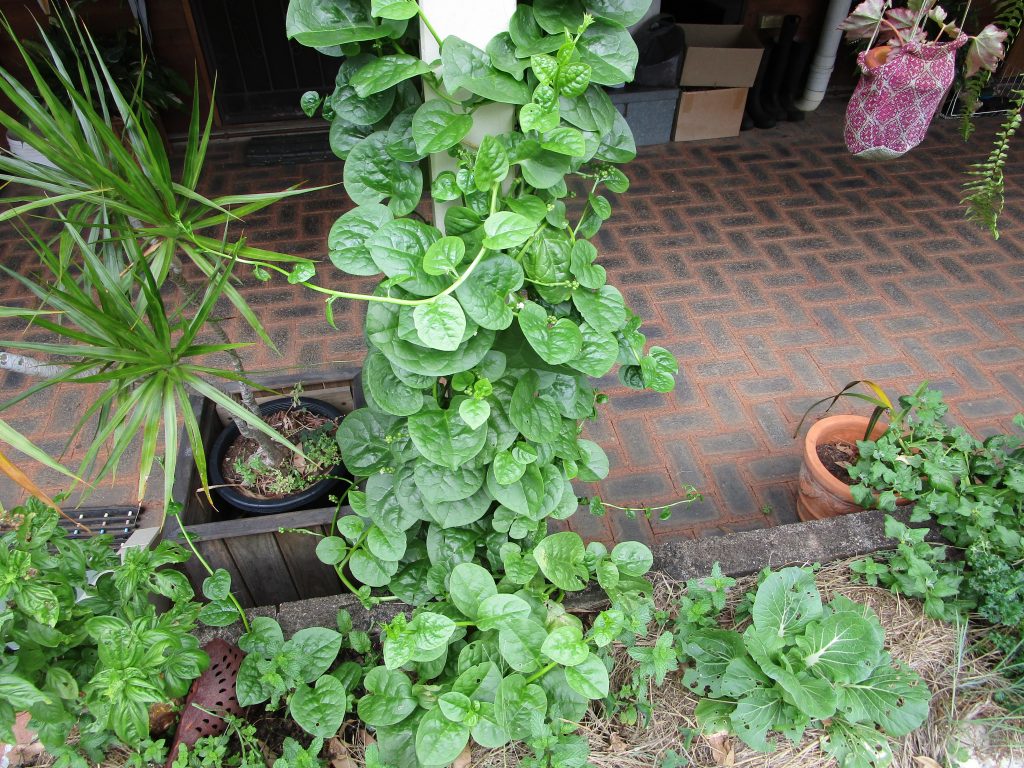
Also known as Malabar Spinach. It is an edible perennial vine native to India, S-E Asia and New Guinea where it is widely used a s a leaf vegetable.
How to Grow
Unlike Warrigal Greens, Ceylon spinach is a climber so will require a trellis or some kind of support to attach itself to. I have it planted where it receives morning sun , in a well drained fairly rich soil and it has received a weekly watering. I have been amazed how quickly it has grown and the bugs haven’t touched it at all.
Nutrition
Ceylon Spinach has thick fleshy leaves which contain mucilage (a form of soluble fibre) which aids in digestion. Like spinach it is high in iron but it also has many additional benefits. It contains the antioxidants Lutein and Beta-Carotene. It is a very good source of Vitamin A and Vitamin C. It also contains good amounts of B vitamins and minerals such as potassium, manganese, calcium, magnesium and copper. It is reportedly lower in oxalic acid compared with regular spinach which is a bonus.
How to Use
Again like Warrigal Greens, Ceylon Spinach can be used as a substitute for regular spinach or silverbeet. Use in soups, stews, in scrambled tofu, steamed, in stir frys , smoothies etc…
*Warrigal Greens and Ceylon Spinach may not be quite as tasty as their regular spinach counterparts but I believe this is a small price to pay in order to have two summer greens that are highly nutritious and easy to grow!